Sorting
Source
Katalog księgozbioru
(1)
Form of Work
Albumy i książki artystyczne
(1)
Książki
(1)
Author
Alcolea y Blanch Santiago (1951- )
(1)
Rees Richard Lewis
(1)
Year
1990 - 1999
(1)
Time Period of Creation
1901-2000
(1)
1989-2000
(1)
Country
Spain
(1)
Language
English
(1)
Subject
El Greco (ok. 1541-1614)
(1)
Malarze hiszpańscy
(1)
Realizm
(1)
Sztuka
(1)
Twórczość
(1)
Subject: time
1501-1600
(1)
Genre/Form
Album
(1)
Malarstwo hiszpańskie
(1)
Domain
Kultura i sztuka
(1)
1 result Filter
Book
In basket
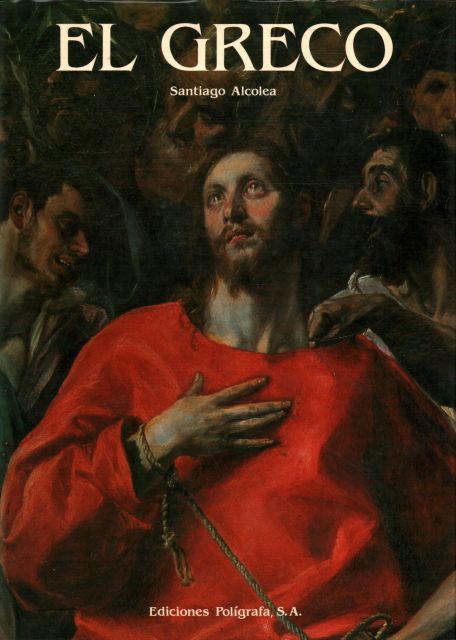
El Greco / Santiago Alcolea ; [translation by Richard-Lewis Rees]. - Barcelona : Ediciones Polígrafa, S. A., 1990. - 127 stron : ilustracje, portrety ; 30 cm.
Doménicos Theotokópoulos, lepiej znany jako El Greco (1541–1621), zdobył wykształcenie artystyczne na Krecie, w Wenecji i Rzymie – trzech centrach sztuki, które odwiedził. Mimo że uczył się od wielkich włoskich artystów XVI wieku, jego arogancja była tak wielka, że ​​posunął się do stwierdzenia, iż Michał Anioł „był dobrym człowiekiem, ale nie umiał malować”, zauważając, że Sąd Ostateczny można zamalować, a jemu można zlecić jego przemalowanie „z uczciwością i przyzwoitością, nie tracąc przy tym jakości obrazu”. Współcześni uważali go za osobę o trudnym charakterze. W 1577 roku przeniósł się do Hiszpanii i zamieszkał w Toledo. Jako artysta, potrafił skutecznie realizować realizm, ale w dążeniu do idealnych form, stosował szereg osobistych metod: wydłużone sylwetki, szczupłe twarze, zniekształcone skróty perspektywiczne, dramatyczne rytmy i nieustanną inwencję w posługiwaniu się kolorem, wykraczającą daleko poza możliwości, na jakie odważyli się inni artyści jego czasów. El Greco zyskał uznanie już za życia i potrafił przeniknąć mistyczny klimat Hiszpanii pod rządami Filipa II. W tym bogato ilustrowanym tomie profesor Santiago Alcolea opisuje najważniejsze aspekty życia i twórczości tego artysty, jednego z prawdziwych mistrzów europejskiej sztuki malarskiej. [www.amazon.pl]
Doménicos Theotokópoulos, better known as El Greco (1541-1621), gained his training as an artist in Crete,Venice and Rome, the three centers of art that he passed through.Yet even though he learned from the great Italian artists of the 16th century, his arrogance was such that he went so far as to say that Michelangelo was a good man but he did not know how to paint, remarking that the Last Judgment could be painted over and that he could be commissioned to re-do it with honesty and decency and no less quality in the painting. His contemporaries found him a difficult personality. In 1577, he moved to Spain and made his home in Toledo. As an artist, he was capable of effective realism, but in his quest for ideal forms, he adopted a number of personal methods: elongated figures, thin faces, distorted foreshortening, dramatic rhythms and constant inventiveness in his use of color far beyond anything others of his day dared to do. El Greco was acclaimed in his own lifetime and was able to penetrate the mystical feeling of Spain under Philip II. In this lavishly illustrated volume, Professor Santiago Alcolea i Gil describes the most notable aspects of the life and work of this artist, one of the true masters in European pictorial art. [www.amazon.pl]
The item has been added to the basket. If you don't know what the basket is for, click here for details.
Do not show it again